crown

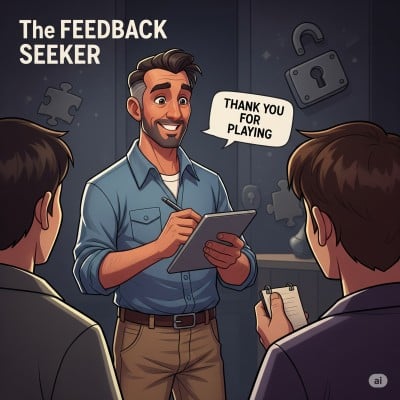
The Feedback Seeker

Actively seeks player feedback to improve the experience.

Game Masters

members
3 Game Masters USING THIS PERSONA
QR Code icon

Assign Persona Instantly

Scan the QR code to link and assign this persona seamlessly.
Quick, secure, and effortless your persona is just one scan away.

QR Code

When Does The Feedback Seeker Shine? ๐Ÿง 

The Feedback Seeker comes into their own after gameplay has concluded. Once players have solved the final puzzle, celebrated their success (or faced the bittersweet sting of a narrow defeat), the role of The Feedback Seeker begins ๐Ÿงฉ ๐Ÿ•ฐ ๏ธ.

This is the moment when emotions are still running high. Players are buzzing with adrenaline, replaying their choices, laughing about mistakes, and marveling at the clever design ๐Ÿ“Š ๐ŸŽญ. The Feedback Seeker steps in to capture this raw energy, using it as an opportunity to gather genuine, unfiltered insights.

They shine not only in collecting immediate impressions but also in analyzing and transforming feedback into action. Over time, they become the bridge between players and designers, ensuring the escape room doesn’t stagnate but instead evolves with every new group that enters ๐Ÿ‘ ๐Ÿ”.

Who is The Feedback Seeker? ๐Ÿ’ฌ ๐ŸŒฑ

The Feedback Seeker is a communicator, a listener, and a facilitator of change. Their primary skill set is not rooted in technology, design, or construction but in people skills ๐Ÿ“ˆ ๐ŸŽญ.

They are often:

  • ๐Ÿ‘‚ Empathetic listeners who can read between the lines and pick up on subtle cues.
  • ๐Ÿ—ฃ ๏ธ Curious conversationalists who genuinely want to know how players felt, what they enjoyed, and where they struggled.
  • ๐Ÿค Diplomatic communicators who can hear criticism without defensiveness and transform it into actionable insights.

The Feedback Seeker is not always the loudest person in the room. Instead, they excel at making others feel comfortable enough to share their honest opinions. Their greatest strength is their ability to create an atmosphere where players feel valued, heard, and respected ๐ŸŒˆ ๐Ÿ—ฃ ๏ธ.

They thrive on the idea that every piece of feedback whether positive or negative is a stepping stone toward improvement ๐Ÿงฉ ๐Ÿ“ˆ.

Team unites through immersive mystery.
Knowledge expands through playful discovery.

Escape Rooms and The Feedback Seeker: Enhancing Experiences Through Input ๐Ÿง 

Escape rooms live and die by their reputation. A well-designed room can quickly lose its luster if players feel frustrated by poor instructions, broken props, or puzzles that don’t quite make sense ๐ŸŽญ ๐Ÿ“ˆ. Conversely, even a simple room can shine if players feel the creators are listening to them and improving continuously.

This is where The Feedback Seeker plays a pivotal role. By actively engaging with players ๐Ÿค ๐ŸŽ‰, they ensure that each escape room experience is not static but adaptive and ever-evolving.

Some examples of their impact include:

  • ๐Ÿ” Identifying unclear puzzles: If multiple groups struggle with the same riddle, The Feedback Seeker raises this to the design team for refinement.
  • โš  ๏ธ Spotting technical issues: If players consistently mention a faulty lock or sensor, The Feedback Seeker ensures it is addressed quickly.
  • ๐Ÿ“– Improving storytelling: If players don’t understand the narrative arc, they can suggest adding context or clues to enhance immersion.
  • ๐ŸŽค Elevating hospitality: Feedback may reveal that the introduction or debrief lacks energy, prompting staff training.

In essence, The Feedback Seeker ensures that players are co-creators of the experience, helping shape the escape room with their voice ๐Ÿง  ๐ŸŽญ.

What Does The Feedback Seeker Do? ๐Ÿง 

Collecting Feedback ๐Ÿ“‹

The Feedback Seeker’s most visible responsibility is to gather input from players. This can take many forms:

  • ๐Ÿ“ Post-game surveys: short questionnaires asking players about difficulty, enjoyment, and immersion.
  • ๐Ÿ—ฃ ๏ธ Casual conversations: informal chats where players feel free to speak openly.
  • ๐Ÿ‘€ Observation notes: watching how teams interact during gameplay and noting patterns.

They recognize that not all feedback will come in structured forms sometimes the most valuable insights emerge in spontaneous comments like, “I loved that lock puzzle, but I wish the clue was clearer ๐ŸŽฏ ๐Ÿง .”

Analyzing Responses ๐Ÿ“Š

Collecting feedback is only the first step. The Feedback Seeker must also identify trends and patterns. This often means sorting through data, categorizing comments ๐Ÿ“ˆ ๐Ÿ“‹, and distinguishing between isolated opinions and recurring concerns.

  • ๐Ÿค” If one group finds a puzzle too hard, it might just be their skill level.
  • ๐Ÿšจ If ten groups mention the same issue, it signals a design flaw.

Through analysis, The Feedback Seeker transforms raw impressions into actionable insights ๐Ÿง  ๐Ÿ”ง.

Implementing Changes ๐Ÿค

The Feedback Seeker does not work alone. Once they gather insights, they collaborate with the wider escape room team:

•    ๐ŸŽฎ Game Designers to adjust puzzles or rework flow.
•    ๐Ÿ”ง Tech Wizards to fix recurring gadget issues.
•   ๐ŸŽญ  Atmosphere Architects to tweak decor, lighting, or sound for clarity.
•   ๐Ÿง˜ Mentors to refine player onboarding and instructions.

By closing the feedback loop, The Feedback Seeker ensures that feedback is not simply collected, but acted upon.

Why is The Feedback Seeker Important? ๐ŸŽญ ๐Ÿ“ˆ

Escape rooms exist in a competitive market where player experiences matter. A single negative review can deter dozens of potential customers, while glowing testimonials can elevate a venue to legendary status ๐ŸŽ‰ ๐Ÿงฉ.

The Feedback Seeker safeguards against stagnation. They prevent the escape room from being a one-time wonder that fades into mediocrity ๐Ÿ” ๐Ÿ˜ถ. Instead, they ensure that:

  • ๐Ÿ”ง Weaknesses are identified and corrected quickly.
  • ๐ŸŽ‰ Strengths are amplified and celebrated.
  • ๐Ÿค Players feel valued because their voices shape the future of the room.

By continuously refining the experience, The Feedback Seeker helps transform a good escape room into a great one, and a great one into an unforgettable adventure ๐Ÿ‘ ๐Ÿ“ˆ.

Wonder weaves through enchanted narration.

Where Can You Find The Feedback Seeker? ๐Ÿ” ๐Ÿงฉ

The Feedback Seeker is often present in escape rooms that emphasize player-centered design ๐ŸŽญ ๐Ÿ“ˆ. They can usually be found:

  • ๐ŸŽ‰ At the end of the game, chatting with teams, congratulating them, and guiding them through a feedback process.
  • ๐Ÿ“Š Behind the scenes, analyzing survey responses and compiling reports for the design team.
  • ๐ŸŒ Online, responding to reviews, thanking players for their feedback, and learning from their experiences.

They are most active in venues that prioritize continuous growth and view every player interaction as an opportunity to improve.

How Can You Be a Better Feedback Seeker in Escape Rooms? ๐Ÿ“ˆ ๐Ÿค

Develop Survey Tools ๐Ÿ“‹

Craft surveys that are short, clear, and meaningful. Avoid generic questions and instead ask specifics ๐Ÿง  ๐Ÿ”:

  • “Which puzzle did you enjoy the most?”
  • “Did any part of the game feel confusing?”
  • “On a scale of 1–10, how immersive was the story?

Engage in Conversations ๐Ÿ—ฃ ๏ธ

Not all feedback can be captured in a form. Take time to chat with players. Encourage honesty by ๐Ÿง  ๐Ÿ•ฐ ๏ธ showing genuine interest rather than defensiveness.

Analyze Data ๐Ÿ“Š

Go beyond collecting opinions interpret them. Look for recurring themes and separate emotional reactions from structural issues ๐Ÿง  ๐Ÿ“ˆ.

Be Open to Criticism ๐Ÿง˜

Develop a mindset that views criticism as opportunity rather than attack. Even harsh feedback can reveal hidden flaws that, once corrected, strengthen the escape room ๐Ÿ”ง ๐ŸŽ‰.

Follow Up ๐Ÿ“ข

Show players that their voices matter. If changes are made based on their feedback, highlight this in social media posts or ๐Ÿ“ฃ ๐ŸŒŸ newsletters. It builds loyalty and demonstrates respect.

Final Thoughts on The Feedback Seeker ๐Ÿ” ๐Ÿ˜ถ

The Feedback Seeker can be seen as the true guardian of growth within the escape room industry. While designers, puzzle creators, and technology experts each play an essential role in shaping the environment and mechanics of the experience, it is the Feedback Seeker who ensures that the heartbeat of the escape room the player’s perspective never gets lost in the process ๐ŸŽญ ๐Ÿ’ฌ. Without this role, escape rooms risk becoming one-dimensional, relying solely on initial creativity rather than sustained innovation. By intentionally prioritizing the voices of players, the Feedback Seeker guarantees that these experiences remain fresh, dynamic, and deeply engaging ๐Ÿ“ˆ ๐ŸŽ‰.

What makes the Feedback Seeker unique is their commitment to looking beyond the immediate excitement of a game session ๐ŸŽญ ๐ŸŒˆ. Many escape rooms succeed at first because of novel puzzles or impressive set designs, but over time, even the most impressive ideas can lose their impact if they are never adjusted or refined. The Feedback Seeker steps in at this crucial point, acting as a bridge between the creators and the participants. They collect insights, observations, and reactions both the enthusiastic praise and the constructive criticism and translate them into meaningful changes ๐ŸŒŸ. In this way, the Feedback Seeker not only helps to solve problems but also uncovers opportunities for future creativity ๐Ÿ” ๐Ÿ˜ถ.

Their role is also an exercise in humility. Escape room designers often pour immense passion, effort, and vision into their work, and it can be challenging to accept that players might see flaws or gaps in the experience ๐Ÿงฉ ๐Ÿ’”. However, the Feedback Seeker demonstrates that genuine improvement begins with openness ๐Ÿ“– ๐ŸŽฏ. By encouraging creators to embrace feedback rather than fear it, they help transform critique into a tool for progress rather than a threat to artistic pride. This shift in mindset ensures that escape rooms grow in alignment with the needs and expectations of their audiences, rather than clinging to outdated ideas ๐Ÿ’ก ๐ŸŽฌ.

Equally important is the fact that feedback provides valuable clues about what truly resonates with players. For example, if a majority of participants highlight the emotional impact of a storyline or the cleverness of a particular puzzle, those insights can guide future designs and expansions โš  ๏ธ ๐Ÿ“ˆ. Similarly, recurring frustrations whether they stem from unclear instructions, overly complex mechanics, or pacing issues become opportunities for refinement. The Feedback Seeker does not simply record these details; they analyze patterns, identify priorities, and advocate for changes that maximize both enjoyment and immersion. In doing so, they ensure that every adjustment is purposeful rather than reactive. ๐Ÿง  ๐Ÿ”ง

Users with this Persona

Rookie Escaper I

Keith Kirkland

The Feedback Seeker

Puzzle Maestro

Karim Benzema

The Feedback Seeker

Puzzle Maestro

Britanni Fitzpatrick

Love this Persona? Make It Yours!

Do you see yourself in this persona?
Click below to add it to your profile and show the community who you are!

Claim This Persona

More Personas

The Atmosphere Architect

Focuses on creating the right mood with decor and sound.

The Community Builder

Fosters teamwork and collaboration among players.

The Game Designer

Loves designing unique escape room concepts from scratch.

The Puzzle Master

Creates immersive narratives to engage players

The Perfectionist

Ensures every detail is polished for a seamless experience.

The Innovator

Pushing Boundaries with New Mechanics

Escaperx Agent